Μεταποίηση
Speak-up όταν κινδυνεύουν η ασφάλεια και η ποιότητα στη μονάδα
Δομημένες οδοί γνωστοποίησης για τους κατασκευαστές - κάλυψη κινδύνων για την ασφάλεια, παραποίηση της ποιότητας και δωροδοκία πέρα από τα συνηθισμένα κανάλια διαχείρισης γραμμών.
Οι θάνατοι εργαζομένων στη Μεγάλη Βρετανία το 2024/25 (ετήσιες στατιστικές για την υγεία και την ασφάλεια στο χώρο εργασίας HSE) - εξηγώντας γιατί η ελεγχόμενη ομιλία για τους κινδύνους ασφαλείας έχει σημασία σε χώρους υψηλού κινδύνου. Δεν μετράει η αποκάλυψη καταγγελιών.
Source: HSE ΕΤΗΣΙΕΣ ΣΤΑΤΙΣΤΙΚΕΣ ΥΓΕΙΑΣ και ΑΣΦΑΛΕΙΑΣ στο ΧΩΡΟ ΕΡΓΑΣΙΑΣ 2024 · View source
Οι εργαζόμενοι που εκτιμάται ότι υπέφεραν από προβλήματα υγείας που σχετίζονται με την εργασία στη Μεγάλη Βρετανία το 2024/25 - φόρτο εργασίας H&S που ενισχύει την υπόθεση για προσβάσιμες εσωτερικές αναφορές. Δεν μετράει η αποκάλυψη καταγγελιών.
Source: HSE ΕΤΗΣΙΕΣ ΣΤΑΤΙΣΤΙΚΕΣ ΥΓΕΙΑΣ και ΑΣΦΑΛΕΙΑΣ στο ΧΩΡΟ ΕΡΓΑΣΙΑΣ 2024 · View source
Εκτιμώμενο κόστος των τραυματισμών στον χώρο εργασίας και των νέων περιπτώσεων κακής υγείας που σχετίζονται με την εργασία το 2023/24 (απελευθέρωση HSE) - οικονομικό πλαίσιο επιβάρυνσης της Υ&Α, όχι καταμέτρηση των εκθέσεων ομιλίας.
Source: HSE ΕΤΗΣΙΕΣ ΣΤΑΤΙΣΤΙΚΕΣ ΥΓΕΙΑΣ και ΑΣΦΑΛΕΙΑΣ στο ΧΩΡΟ ΕΡΓΑΣΙΑΣ 2024 · View source
Τι μπορεί να αναφερθεί μέσω του καναλιού καταγγελίας δυσλειτουργιών των φυτών σας;
Η επιχειρηματολογία των εργοστασίων συχνά περιλαμβάνει συγκαλύψεις παρ 'ολίγον ζημιών, αποτυχίες φύλαξης, περιβαλλοντικά περιστατικά, ακεραιότητα αρχείου ποιότητας και κινδύνους διευκόλυνσης της εφοδιαστικής αλυσίδας που ενισχύονται από ιεραρχίες μετατόπισης και πίεση παραγωγής.
Παραλίγο συγκαλύψεις στη βάρδια
Οι χειριστές ενδέχεται να πιεστούν να μην καταγράψουν συμβάντα που θα σταματούσαν μια γραμμή ή θα προκαλούσαν κυρώσεις στην παραγωγή.
Φρουρά μηχανήματος και αστοχίες H&S
Γνωστές αποτυχίες φύλαξης ή κλειδώματος μπορούν να συνεχιστούν όταν η αναφορά γίνεται μόνο μέσω του επόπτη που κατέχει τους στόχους εξόδου.
Παραποιημένα αρχεία ποιότητας
Τα αποτελέσματα της επιθεώρησης ή τα πιστοποιητικά παρτίδας ενδέχεται να τροποποιηθούν για να τηρήσουν τις προθεσμίες των πελατών ή των αποστολών - δημιουργώντας λανθάνοντα κίνδυνο προϊόντος και ευθύνης.
Δωροδοκία στην αλυσίδα εφοδιασμού και κουλτούρα δώρων
Οι ομάδες προμηθειών και οι αγοραστές εγκαταστάσεων αντιμετωπίζουν τον κίνδυνο Bribery Act από τις πιέσεις διευκόλυνσης και την αδήλωτη φιλοξενία των προμηθευτών.
Καταστολή περιβαλλοντικών συμβάντων
Οι διαρροές, οι εκπομπές ή οι αστοχίες χειρισμού αποβλήτων μπορούν να καθαριστούν αθόρυβα χωρίς να ακολουθηθεί η επίσημη διαδικασία συμβάντων.
Δημοσιογράφοι σίγασης πίεσης παραγωγής
Οι εργαζόμενοι σε βάρδιες μπορεί να φοβούνται αντίποινα ή συνέπειες υπερωριών εάν θέσουν ζητήματα στο πρόσωπο που είναι υπεύθυνο για την παραγωγή.
Σχεδιασμός διαδικασίας
Πώς αντιμετωπίζονται οι αναφορές καταγγελίας δυσλειτουργιών στη μεταποίηση
Μια εσωτερική διαδρομή πέντε βημάτων που συνδέει τους ρεπόρτερ του εργοστασίου με την H&S, τη συμμόρφωση και την ποιοτική ιδιοκτησία - παράλληλα με τις εξωτερικές επιλογές συνταγογραφούμενου ατόμου της HSE, όπου ενδείκνυται.
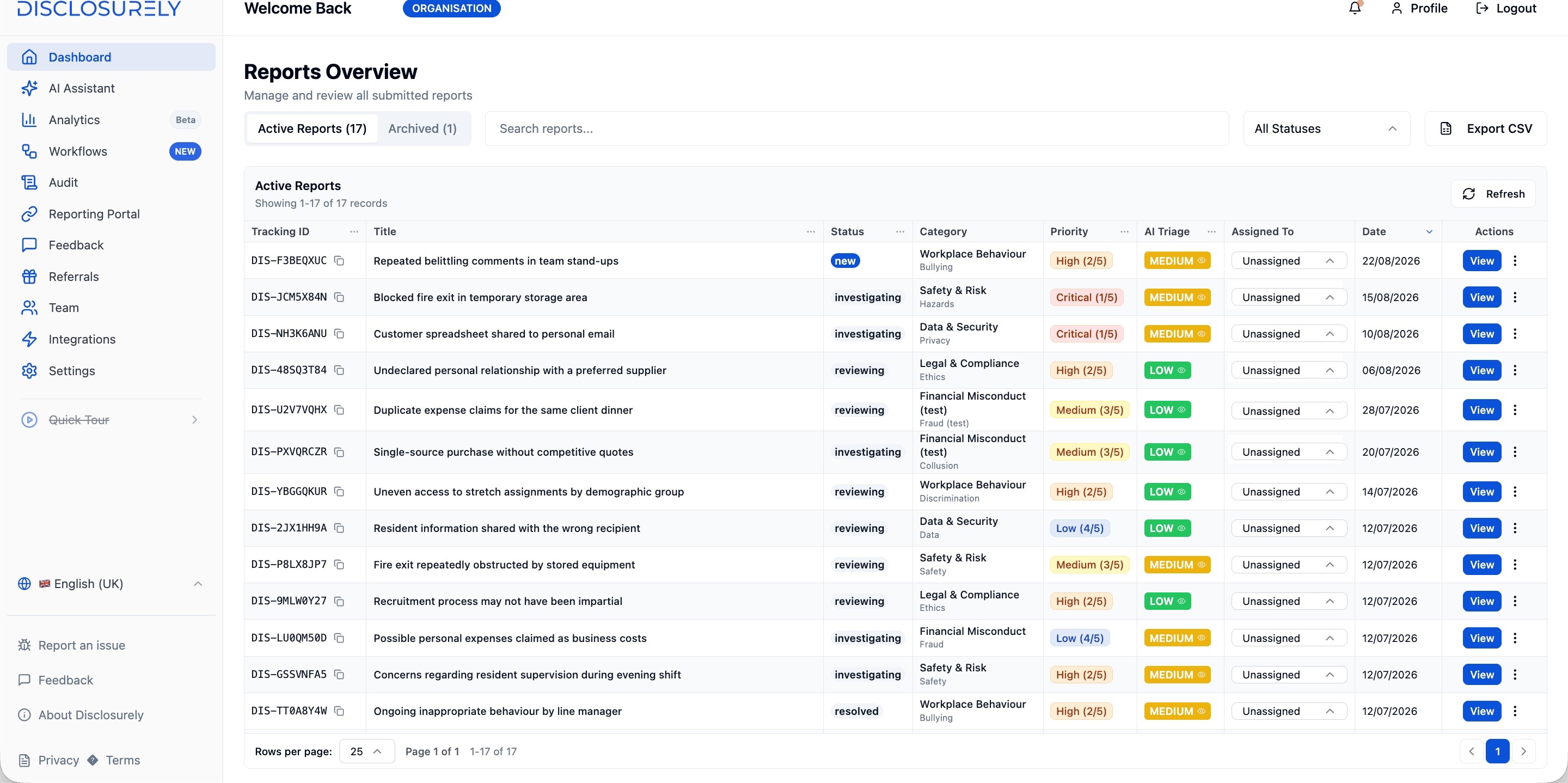
Ο χειριστής, ο τεχνικός ή άλλος εργαζόμενος στο εργοτάξιο χρησιμοποιεί την ασφαλή πύλη
Υπεύθυνος: Άτομο που μεταδίδει την εμπειρία
Εκδόθηκε αναφορά παρακολούθησης. Αξιολογήθηκε ο άμεσος κίνδυνος για τους ανθρώπους, τα φυτά, τα προϊόντα ή το περιβάλλον
Υπεύθυνος: Υ&Α /ΠΑΡΑΛΑΒΗ ΣΥΜΜΟΡΦΩΣ
Λεπτομέρειες βάρδιας, φωτογραφίες και αποδεικτικά στοιχεία που συγκεντρώθηκαν μέσω προστατευμένων μηνυμάτων - εκτός email ανοιχτού εργοστασίου
Υπεύθυνος: Ανατεθειμένος χειριστής
Τεκμηριωμένα ευρήματα, αποφάσεις διακοπής εργασίας ή περιορισμού που έχουν καταγραφεί για σκοπούς Υ&Α, ποιότητας ή ακεραιότητας
Υπεύθυνος: Υ&Α, ποιότητα ή νόμιμο πεδίο εφαρμογής
Το αποτέλεσμα καταγράφηκε. Θέματα διαθέσιμα για την ηγεσία των εγκαταστάσεων και τη συμμόρφωση της ομάδας
Υπεύθυνος: ΔΙΕΥΘΥΝΤΕΣ ΕΠΙΧΕΙΡΗΣΕ
Καταλληλότητα προϊόντος
Ένας ασφαλής δίαυλος αναφοράς για τους κατασκευαστές
Οι κατασκευαστές χρειάζονται μια εσωτερική διαδρομή ομιλίας που λειτουργεί υπό πίεση βάρδιας. Η Disclosurely κατασκευάζει δομές που διοχετεύουν - δεν αντικαθιστούν τις υποχρεώσεις αναφοράς της HSE, τα προγράμματα συμμόρφωσης της Bribery Act ή τα θεσμοθετημένα καθήκοντα περιστατικών.

Ανώνυμη αναφορά πέρα από τον επόπτη
Παρέχει στους χειριστές ένα κανάλι όταν οι ανησυχίες σχετικά με το παρ 'ολίγον ατύχημα, τη φύλαξη ή την ποιότητα διαφορετικά θα παρέμεναν σιωπηλές σύμφωνα με τους στόχους εξόδου.
Ασφαλής διευκρίνιση και κυριότητα της υπόθεσης
Η H&S και οι υποψήφιοι πελάτες ποιότητας μπορούν να ζητήσουν αποδεικτικά στοιχεία, να προσθέσουν σημειώσεις και να διατηρήσουν μια διαδρομή ελέγχου χωρίς ανοιχτές συνομιλίες μέσω email.
Πρόσβαση στο εργοτάξιο και εξαγωγές προγραμμάτων
Πύλη με επωνυμία εργοστασίου ή ομάδας με ασφαλή σύνδεσμο αναφοράς και αφίσες QR για αίθουσες διαλείμματος και κοινόχρηστα σημεία πρόσβασης, διευκολύνοντας την εύρεση του καναλιού επί τόπου για ομάδες μακριά από τα γραφεία - συν εξαγωγές αναλυτικών στοιχείων για έλεγχο ηγεσίας.
FAQ
Συχνές ερωτήσεις για την καταγγελία δυσλειτουργιών σχετικά με τη μεταποίηση
Ερωτήσεις ειδικά για τη μεταποίηση και τα εργοστάσια. Για την ανωνυμία δείτε ανώνυμη αναφορά, για την ασφάλεια ασφάλεια και για την τιμολόγηση τιμές.
Δώστε στις μονάδες σας σαφές κανάλι speak-up
Δημιουργήστε μια επώνυμη πύλη αναφοράς που οι χειριστές μπορούν να χρησιμοποιήσουν πέρα από τον επόπτη - για λόγους ασφάλειας, ποιότητας και ακεραιότητας.