SMEs
Reporting that scales when the inbox stops working
Structured disclosure routes for growing organisations—replacing shared inboxes and spreadsheets without enterprise procurement overhead.

Of occupational fraud cases in the ACFE global study were initially detected by a tip—the most common detection method.
Source: ACFE, Occupational Fraud 2026: A Report to the Nations · View source
Of those tips came from employees, reinforcing why growing organisations need an accessible internal reporting channel.
Source: ACFE, Occupational Fraud 2026: A Report to the Nations · View source
Median duration of occupational fraud schemes before detection—time that grows costly when reports stall in inboxes.
Source: ACFE, Occupational Fraud 2026: A Report to the Nations · View source
What can be reported through your organisation whistleblowing channel?
Close-knit teams feel reporting risk acutely—everyone knows everyone. These are the kinds of concerns employees and contractors typically raise when informal routes stop being safe or reliable.
Fraud & financial misconduct
Expense abuse, payroll integrity issues, and supplier fraud—often first seen by finance or operations staff who hesitate to email a director.
Harassment & inappropriate behaviour
Bullying, discrimination, and interpersonal misconduct that is hard to raise when the person involved sits nearby or controls workload.
Conflicts of interest
Undeclared interests, preferential contracting, and policy overrides by senior people—especially sensitive in smaller leadership teams.
Misuse of company resources
Unauthorised use of assets, systems, or budget that may look minor until a pattern forms and no case record exists.
Health & safety
Workplace safety concerns and near misses that can be deprioritised against delivery pressure without a formal reporting route.
Management conduct & compliance
Concerns about how managers treat people, apply policy, or handle complaints—cases that should never sit only in a shared founder inbox.
Process design
How whistleblowing reports are handled in growing organisations
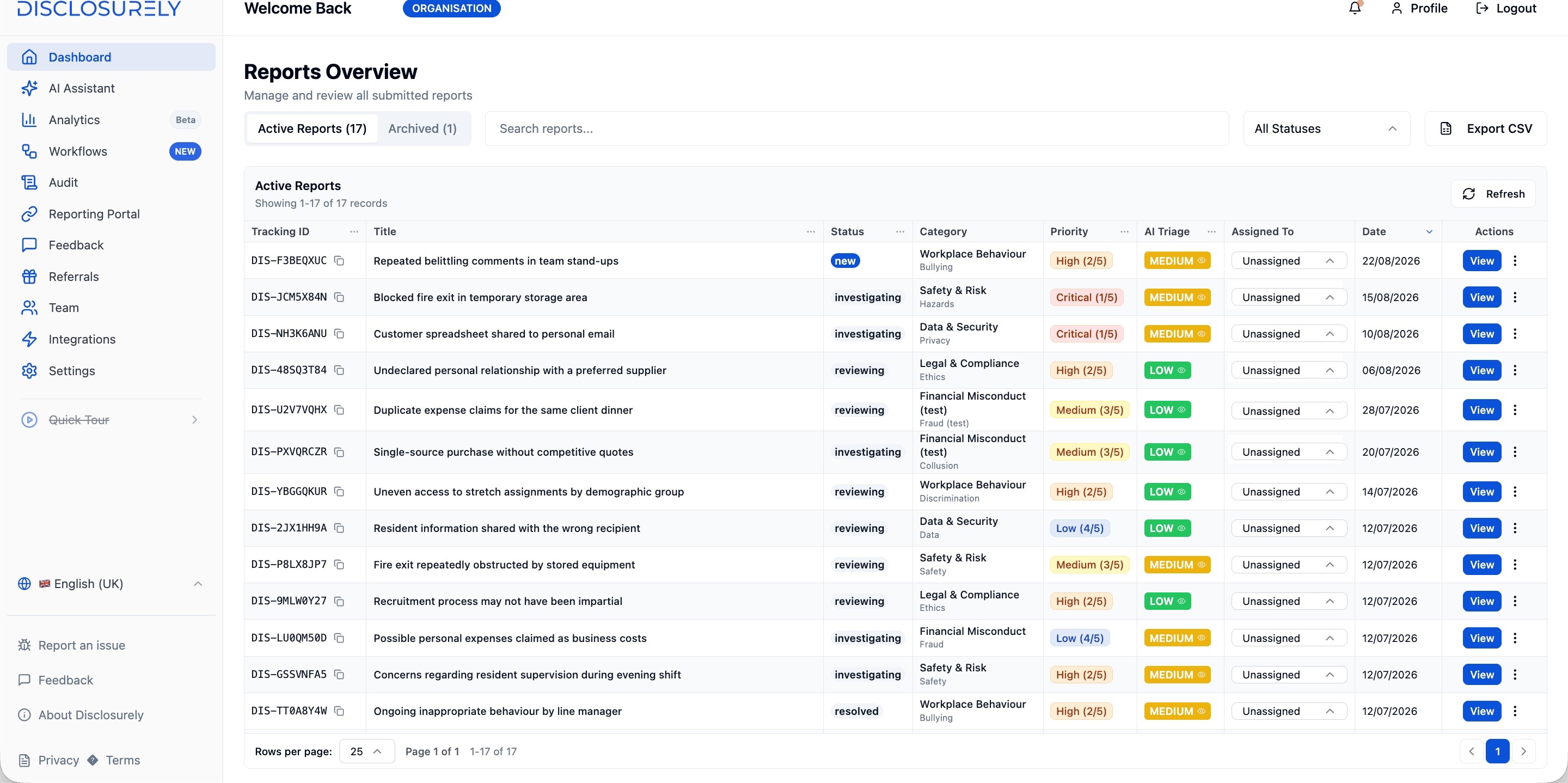
Disclosurely replaces improvised inbox and spreadsheet handling with a controlled five-step process—light enough for a nominated lead, structured enough to defend when someone is on leave or escalations involve senior people.
Employee or contractor uses branded portal
Owner: Reporter
Tracking reference and category assigned within your SLA
Owner: HR or compliance lead
Two-way messaging gathers detail and files without email
Owner: Assigned handler
Notes, evidence, and status tracked in one case
Owner: Case owner
Outcome logged; themes available to MD or board
Owner: Managing director
Product fit
A secure reporting channel for SMEs and growing teams
SMEs often lack a dedicated ethics or compliance function. Disclosurely gives growing organisations structure without enterprise-scale administration—a case record from day one, without the procurement cycle or IT project that enterprise hotlines assume.

Low setup, fast adoption
Branded portal, categories, and case handling without rebuilding HR systems or hiring a GRC team first. Share a secure reporting link and QR code across handbooks, onboarding packs and the intranet so staff can find the channel from day one.
Case ownership that fits the team
Tracking reference, assigned handler, secure follow-up, and status history—flexible enough for an HR-led, ops-led, or adviser-supported model without imposing enterprise bureaucracy.
Evidence that survives staff turnover
Investigations span months; the case chronology stays with the company when someone leaves—ready for leadership review, insurer questions, or board follow-up.
FAQ
Whistleblowing FAQs for SMEs
Questions specific to small and mid-sized organisations. For anonymity see anonymous reporting, for security see security, and for pricing see pricing.
Give your organisation a clear speak-up channel
Create your reporting portal and start accepting confidential reports—without enterprise procurement overhead.